From Storm to Final Check
Roof Insurance Claim Help
A Stateline roofer that documents storm damage every week. We photograph every hit, meet your adjuster on the roof, and send a photo-backed estimate when the first payout misses items the roof actually needs.
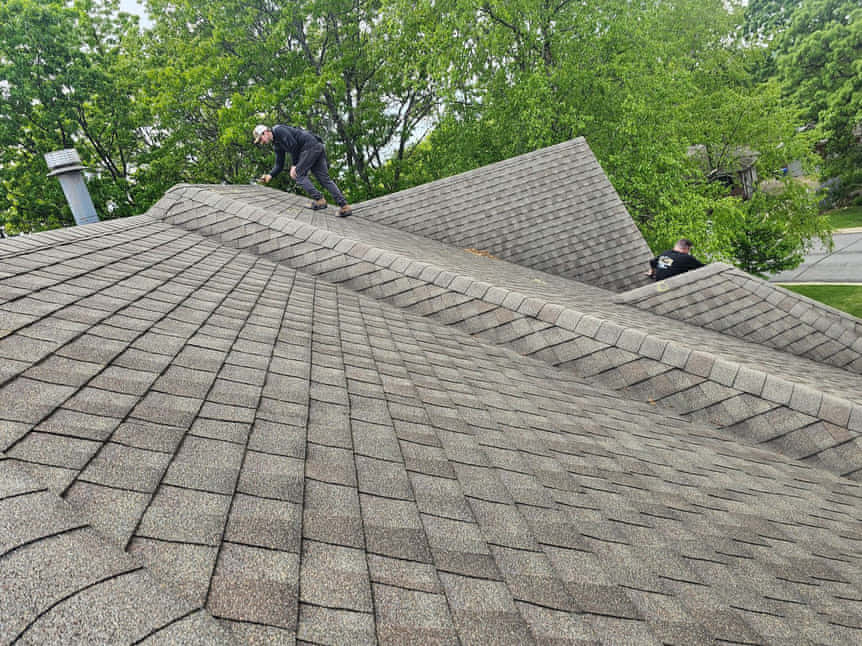
We had extensive wind damage. They had someone come right out and inspect and take pictures of the house and garage.
I’m very happy with the new roof, gutters and leaf guards Elite installed on my home almost 2 years ago. It looks like it did when it was new.
When filing makes sense, and when it doesn't
If the damage is smaller than your deductible, filing puts a mark on your record and pays you nothing. Here's how to tell.
File
Damage on multiple sides, or any interior leak
Multi-side wind lift or hail almost always exceeds your deductible. File.
Probably file
Hail in the last year on a 10+ year roof
Most policies allow one year from the storm date. After that, same damage gets called wear-and-tear and denied. Inspect before the deadline.
Don't file
Damage under your deductible
Pays nothing but still counts against your record. Pay out of pocket. Keep the file clean.
Four phases, from storm to final check
A roof claim moves through four phases. Here's what you do at each step, and what we do alongside you.
Spot the damage and document it
Days 0 to 3What you do
Wait for safe weather. From the ground, look for missing shingles, sand-like granules washing into the gutters, bent flashing, and water stains on ceilings. Don't climb up alone.
What we do
Free roof inspection inside a few business days. Every side of the roof photographed, every hail strike chalk-marked, before you call your carrier.
File the claim and stop further damage
Same weekWhat you do
Call your carrier with the storm date, your policy number, and a short summary of what's wrong. Don't agree to a repair amount on the phone. Tarp anything actively leaking.
What we do
Your photo report is ready before you call. Same-day tarp-ups when the weather allows. Receipts and photos go into your claim file.
Adjuster on the roof, payout written
1 to 3 weeks outWhat you do
Be home for the adjuster meeting. Don't agree to a settlement amount on the spot. Adjusters have minutes per roof. What they see or miss becomes the payout.
What we do
An Elite estimator is there for the adjuster's inspection, photos in hand. Every side of the roof walked. Every hit gets pointed out the first time, not weeks later.
Repair, final invoice, second check
Install + supplementWhat you do
Pay your deductible. That's the only out-of-pocket on covered work. Be home for install day if you can. Otherwise leave us a key.
What we do
If the first payout came up short, we send a supplement (a written add-on, backed by photos and code references). When the work is done, you get the final invoice your carrier needs for the second check, the depreciation release.
The second check most homeowners miss
Replacement-cost policies pay in two checks. The second one is the depreciation, released after the work is done. Most homeowners never ask for it.
ACV · Actual Cash Value
What you get up front
Replacement cost minus depreciation for age and wear. On a replacement-cost policy, the first of two checks. On an ACV-only policy (past the carrier's age cap), the only check you get.
RCV · Replacement Cost Value
What the work actually costs today
Full replacement cost, no age deduction. On a replacement-cost policy, the held-back depreciation releases after the work is invoiced. The second check.
Three things on your policy worth checking before you file: the type of roof coverage (replacement cost or actual-cash-value only), the wind and hail deductible, and any roof-age cap. Your insurance agent can explain all three.
Denied or short-changed? Don't cash the check yet
Most denials are reversible with the right documentation. A few aren't. Here's the rule of thumb.
Usually reversible
Called wear-and-tear, pre-existing, cosmetic, or paid under deductible
Most common denials. Chalk-marked impact photos, NOAA storm dates, matching damage on gutters or AC usually reopen the call. A second inspection often finds what the first missed.
Sometimes reversible
Filed past the deadline (usually one year)
Often final, not always. Hidden damage revealed later or disputed storm dates can re-anchor the deadline. Worth a second look.
Usually final
Roof too old for the policy's age limit
Carrier's call most of the time. Sometimes the age cap drops you to ACV instead of a full denial, so the claim still pays. Read the policy first.
Roof insurance claim questions, answered
Should I file a roof insurance claim?
Three quick checks. Is the damage from a single named storm event with a date you can pull from NOAA storm records? Is the estimate at least 1.5x your deductible after the carrier's depreciation hit? Is the roof under the carrier's age cap (usually 15 or 20 years)? Three yeses, file. One no, get the inspection report first and decide on paper. We climb free either way and hand you the written scope to keep.
Will filing a roof claim raise my insurance premium?
Usually not on its own, but it depends. Hail and wind losses aren't blamed on you, so carriers weigh them differently than a fender-bender. One weather claim on a clean policy typically isn't what moves your rate. Two or three claims in a short window will. And after a bad storm year, carriers often raise rates across the whole region whether you filed or not. The bigger risk most homeowners don't think about: not filing a real loss can quietly hurt you too, because the carrier may move you to actual-cash-value coverage at renewal once the roof gets old enough.
How long do I have to file a roof insurance claim in Illinois or Wisconsin?
Most homeowner policies in both states give you one year from the storm date to file. A few allow two. The longer you wait, the harder it gets to tie damage to a specific storm, and after the policy window closes the same damage usually gets called wear-and-tear and denied. Wisconsin also sets a 1-year minimum to file suit on a property policy under state law. If you had a wind or hail event in the last twelve months and haven't filed, book an inspection before the window closes.
Can I keep the insurance check and skip the roof repairs?
If your home has a mortgage, no. The lender is usually named on the check and wants proof the work was done. If your home is paid off, you technically can. You'll forfeit the second check (the depreciation release), and the next claim on the same damage will be denied as pre-existing. The math doesn't work. We don't recommend it.
Does my contractor have to be the one my insurance recommends?
No. The contractor is your decision, not the carrier's. Insurance companies may suggest a preferred vendor, but they can't require you to use one. Same rule in both Illinois and Wisconsin. We're happy to be the second opinion on any preferred-vendor estimate.
What can I do if my claim was denied or short-paid?
The order matters more than the options. Start with a supplement sent by your contractor: it's free, and chalk-marked photos with NOAA storm dates answer "wear-and-tear" and "cosmetic" denials with evidence. If the carrier won't budge, ask for re-inspection with a different adjuster, which is your right under both state insurance codes. Public adjusters (10 to 15 percent contingency on the recovered amount) make sense only on larger claims where the carrier is dug in. State complaints to the IL Department of Insurance or WI Office of the Commissioner of Insurance are last resort and slow.
How does my deductible work on a roof insurance claim?
On a covered claim, your deductible is the only thing you pay. The carrier pays the rest of the approved scope. Roof deductibles in Illinois and Wisconsin are typically either a flat dollar amount or a percentage of your dwelling coverage (commonly 1% to 2%, sometimes higher for wind or hail specifically). Check your declarations page for "wind/hail deductible"; it's often different from your standard deductible. You pay your deductible when the work is done. No fee for the inspection, the adjuster meeting, or sending a supplement when the first payout came up short.