5-inch K-style
Standard residential
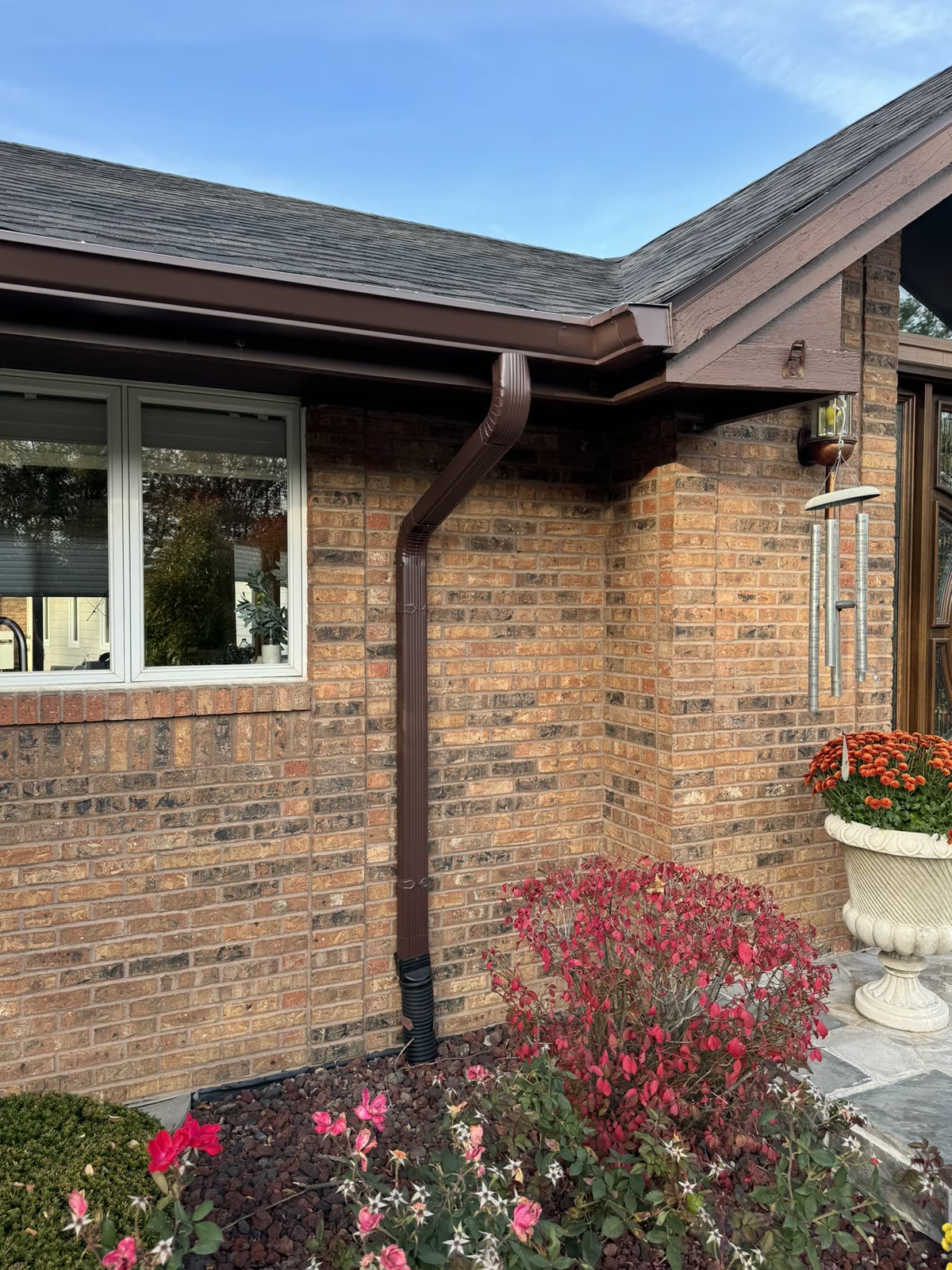
Fits most ranches and split-levels with simple gable roofs. Paired with a 2 by 3 inch downspout. Color-matched to your trim.
From Install Through Service
New installs, repairs, leaf guards, and the fascia work behind them. We roll seamless aluminum on site and hang it on hidden screwed hangers so it stays put through Stateline winters.
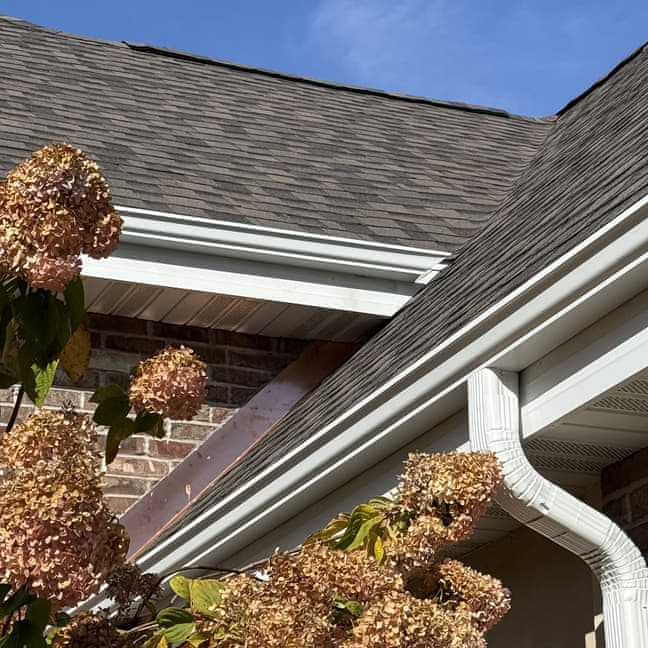
Lit and his team have been an absolute pleasure to work with and have completed the soffit and fascia repair and covering on our 110+ year old home. The end results are flawless and high quality, providing a tight and clean appearance.
I used this company to replace siding on my garage, as well as reinstall gutters properly. We love the work they did and appreciated the follow-up after. If you are looking for a dependable company and honest workers look to Elite.
A machine on the truck rolls each gutter to your exact length. No factory seams between corners, just clean cuts at the corners.
5-inch K-style
Fits most ranches and split-levels with simple gable roofs. Paired with a 2 by 3 inch downspout. Color-matched to your trim.
6-inch K-style
Holds about 50% more water per foot. Right call on two-stories, steep pitches, and any roof where valleys dump into one section.
Half-round
Classic profile for older Stateline homes where K-style would look wrong. Comes with matching round downspouts.
Most contractors default to 5-inch with two downspouts because that's what the truck is loaded for. The right answer comes from the roof.
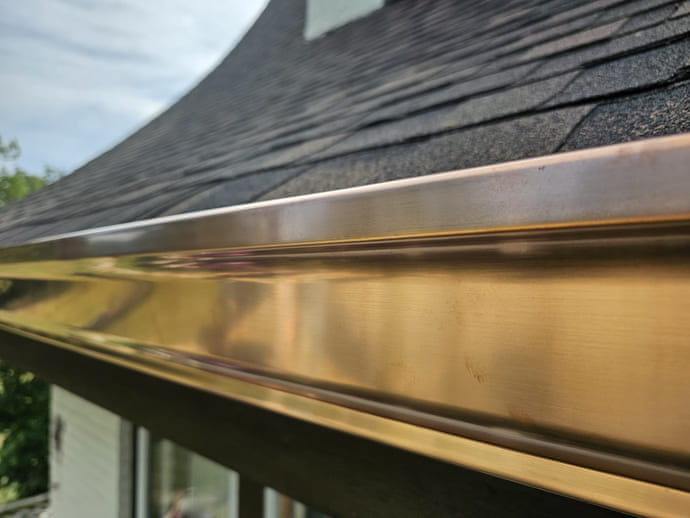
Not every home calls for it. On the ones that do, copper is the last gutter system you ever buy.
Not every failing gutter needs a tear-off. A pulled section can be re-hung, a leaky seam can be sealed, a clog can be cleared. Replacement is the answer when the gutter itself is shot.
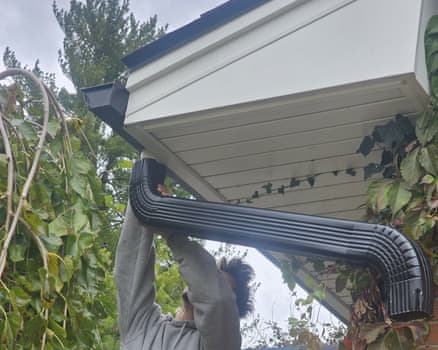
A new gutter on rotted fascia is a clock, not a fix. The wood behind the gutter gets checked before any aluminum goes up.
We install whatever guard you pick. Around Belvidere and Rockford, perforated aluminum runs the most. Here's the honest read on each type so you can match the guard to your roof, your trees, and your budget instead of buying the one the door-to-door salesperson is pushing.
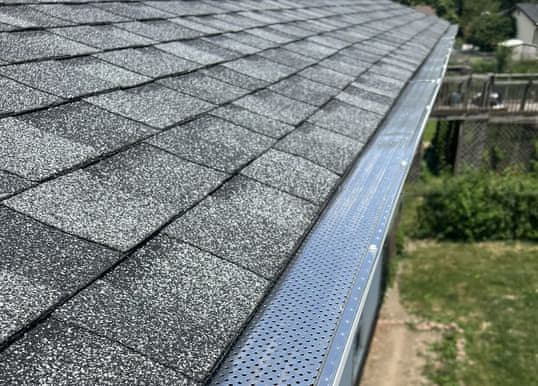
Perforated aluminum
Stamped aluminum sheet over the seamless gutter. Blocks leaves and twigs, passes water. Pine needles and shingle grit can still slip through. Holds up to ladders and ice. Default on most Stateline homes.
Reverse-curve
Metal hood funnels water off the lip into the gutter. LeafGuard, Gutter Helmet, LeafFilter are the big names. Works in heavy rain. Most of the price is brand contract and door-to-door commission, not metal.
Foam and screen
Foam inserts soak water, hold debris, mush out by year two. Basic wire mesh screens let pine needles through. Cheap at the home center, expensive to unclog later.
No gutter guard makes cleaning go away. The good ones cut it from twice a year to once every few years.
Most full-home gutter jobs are a single day. The order doesn't change.
Linear footage by side. Old gutters and hardware come down first.
Every board probed. Anything soft gets called out and replaced before new aluminum goes up.
Seamless from corner to corner. Sealed at the corners only.
Hidden hangers screwed through the fascia every 24 to 36 inches. Gutter pitched toward the downspout, checked with a level.
Downspout holes cut and aimed away from the foundation. Hose run from each high end. Magnet sweep, walk-around with you.
If the fascia is sound and the weather holds, most homes are done in one day. You'll know which side of that line you're on before we start.
Pull the roof footprint number from your last roofing bid (in squares) and count the valleys. Anything under 18 squares with two or fewer valleys runs fine on 5-inch K-style. Above 25 squares, four or more valleys, or any roof with two slopes dumping into one corner needs 6-inch and a 3 by 4 inch downspout. The undersized-gutter giveaway is fascia stain six inches below the lip after a hard rain.
Seamless aluminum gutter installation in the Stateline runs roughly $12 to $25 per installed linear foot in 2026. Most full-house replacements land between $2,200 and $5,000 total. Six-inch K-style adds a small premium over five-inch. The number swings on linear footage, story height, fascia condition, and color match. We measure off the roof and quote against your specific run, not sight unseen.
Repair if the run is under 15 years old, the seams are sound, and the failure is localized: a pulled hanger, one sagging section, a cracked corner miter, or a downspout that came loose. Replace if the gutters are pulling away from the fascia along the whole run, the corners are leaking even after re-sealing, or you're seeing fascia stain underneath. Old sectional gutters with seams every ten feet rarely earn the cost of patching twice. New seamless runs only have joints at the corners.
For most Stateline lots with mature trees, micro-mesh guards earn their keep. They block pine needles, shingle grit, and seeds while still passing water in heavy rain. Foam inserts saturate and overflow. Basic screens let fines through. Big-brand reverse-curve hoods work well but the price reflects the brand contract, not just the metal.
No. Ice dams form when warm air leaks into the attic, melts snow above, and the meltwater refreezes when it hits the cold overhang. The fix is air sealing, insulation, and ventilation in the attic, plus ice and water shield on the roof. Gutter size has nothing to do with it. Anyone selling a 6-inch upgrade as an ice-dam cure is selling the wrong product. The actual fix lives on the residential roofing page.
Sometimes, and probing is the only honest way to tell. On homes over 25 years old with their original fascia, plan for 20 to 40 percent of the linear footage to need replacement. South and west walls fail first. New fascia gets primed before aluminum trim goes on, otherwise the trim sweats moisture against bare wood and the rot cycle restarts. We line-item the linear feet on the bid so you can compare apples to apples against another quote.
It depends on your policy. Hail dimples in aluminum gutters don't usually affect how they work, but some policies cover matching, so when the damaged runs are replaced, the undamaged sections may be covered too. Your carrier decides. We photograph hail strikes on gutters at the same time we document the roof, and the full claim mechanics live on our insurance claim page.