Documented Before the Adjuster
Storm Damage Roof Repair
After a storm rolls through the Stateline, your settlement comes down to one thing: documentation. We get on the roof first, photograph every hit, and meet your adjuster on site. Free inspection, no obligation.
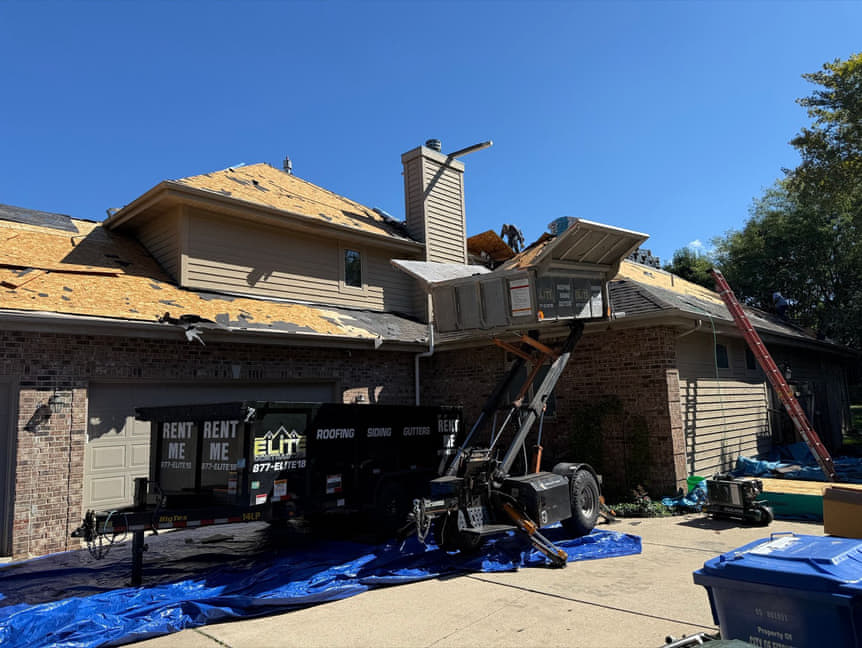
They came right out and took pictures of the house and garage. Without their documentation we would have only received $800 from our insurance company. With their photos the carrier paid $6,500 and everything was fixed to perfection.
I had multiple properties that had hail damage on the roof and the gutter. ... All I did was to make a few phone calls and then get a few brand new roofs and gutters. Elite’s roof crew and the gutter crew are very professional and efficient.
What hail does to a shingle roof
Half of it is invisible from the ground. Here's what's actually up there:
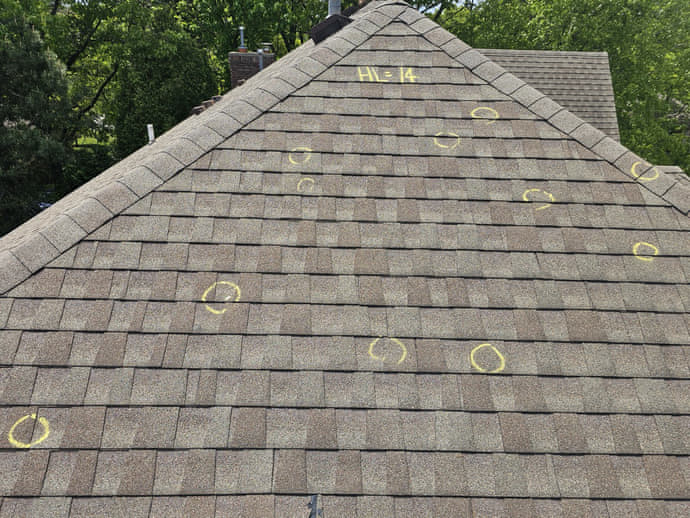
- Bruised shingles, broken granule mats, exposed fibers. Functional damage, the kind carriers replace.
- Cracked or unsealed seal strips that lift in the next high wind
- Dented metal vents, ridge caps, gutter aprons, and step flashing
- Spatter marks on soft metal. Cosmetic, but proof the storm hit your roof.
What wind damage looks like
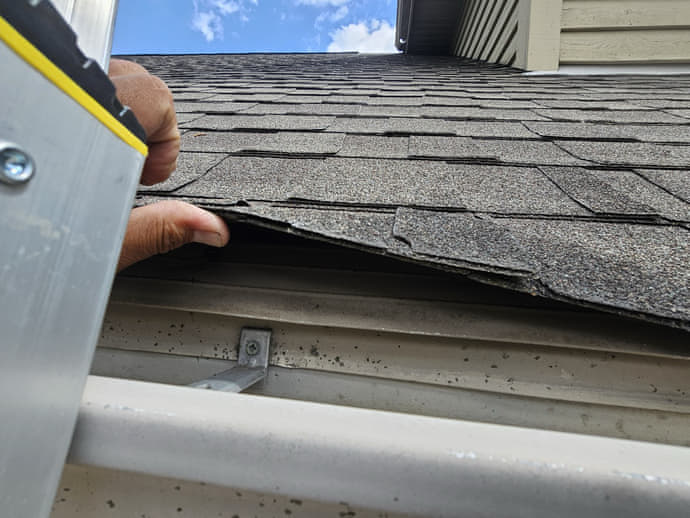
The missing tabs are easy. What lifted around them is the bigger problem.
- Lifted, creased, or missing shingles along the rake and ridge
- Bent or torn flashing around chimneys, sidewalls, and pipe boots
- Granules collecting at the bottom of downspouts after a storm
- Soffit, fascia, or drip edge pulled loose at the corners
Repair or replace? The 25% rule
Cross 25% of a slope with hail or wind hits and most carriers pay for full replacement. Below that line, a targeted repair is honest. Convention, not building code, but it's the threshold every adjuster works to.
How insurance claims work for storm damage roof repair
-
Pre-claim inspection
Chalk-marked hail strikes, photographed lifts and creases, cataloged with date stamps before the carrier is involved.
-
Adjuster meet on site
We climb the roof with your adjuster so the scope catches every loss the first time, not just the easy finds.
-
Supplement when needed
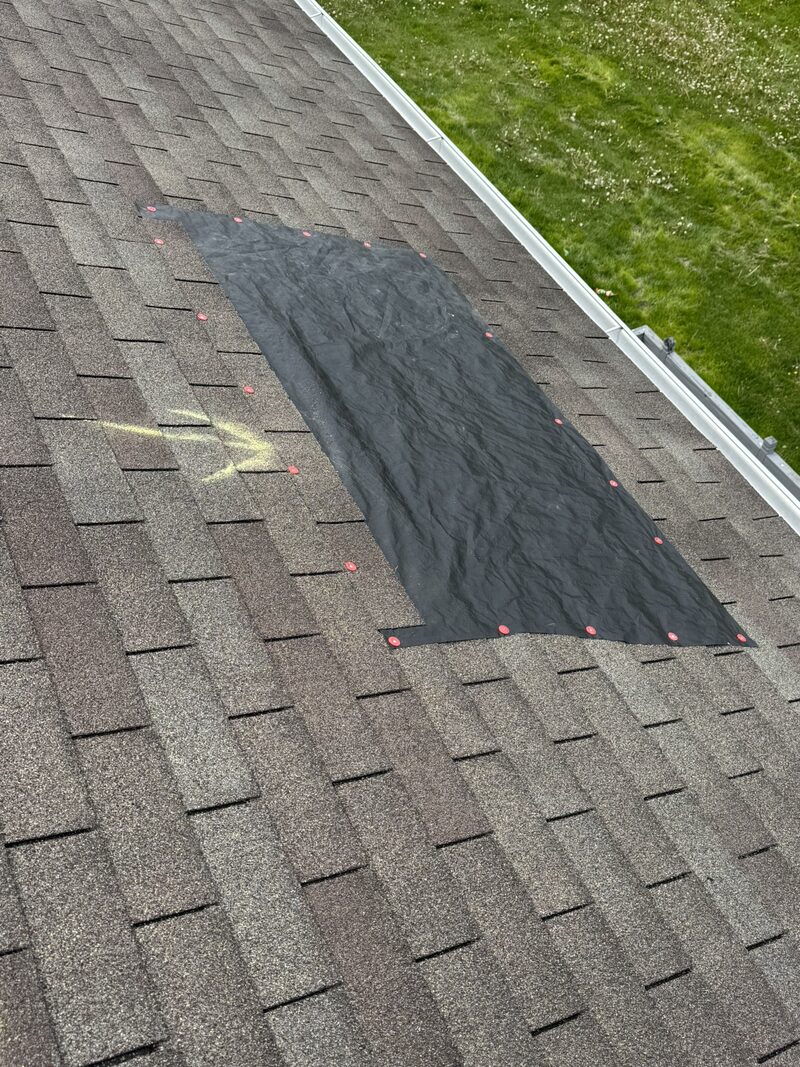
If the scope still comes back short, we send a supplement with photo evidence, manufacturer specs, and code citations behind every line.
Storm damage roof repair questions, answered
How do I know if my roof has storm damage?
Look for missing or lifted shingles, dented gutters and vents, granules collecting at the bottom of downspouts, and water stains on ceilings or in the attic. Most hail damage is not visible from the ground. A free roof inspection from a licensed contractor is the only honest way to know whether your roof took a hit.
Will homeowners insurance cover storm damage to my roof?
Usually, yes. Standard homeowner policies in Illinois and Wisconsin cover sudden, accidental damage from hail and wind. What you collect depends on your deductible, your policy language, and the documentation you put in front of the adjuster. We document the damage before the carrier is involved so the scope reflects every loss the first time.
After a storm, how soon should I have my roof looked at?
Inside two weeks is the real window. Two reasons that matter for the claim. Most Illinois and Wisconsin policies require notice within a "reasonable time," and reasonable gets argued against you the longer you wait. Second, bruise marks on asphalt fade as the granules redistribute in summer heat, so a roof inspected in late August often shows less than the same roof in early July. Book the calm-weather day after a storm, not the week after.
Should I repair or replace my roof after hail damage?
The 25% rule is the carrier threshold, not the homeowner threshold. Two extra checks decide it. If your shingle line is discontinued, a partial repair leaves a visible color-mismatch on the front of the house and tips toward replacement even at lower coverage. Past year 12 to 15, repaired areas outlast the un-hit slopes by years and you end up paying twice. Under ten years on a current shingle line, targeted repair almost always wins.
What should you not say to a roof insurance adjuster?
Don't guess at causes or volunteer that the roof is "old." Don't say a tree branch hit one spot if the whole roof took hail. Don't agree the damage is cosmetic when functional shingle and flashing damage is also up there. Let the photos and the written scope speak. Your job is to walk the adjuster to every hit, not to argue policy language. Our crew climbs with the adjuster and points out every functional loss the first time.
Do I need to be home when the insurance adjuster comes out?
You do not have to be on the roof, but you should be home. We meet the adjuster on site and walk the roof together so the scope reflects every loss we documented. Adjusters are not roofers; a twenty-minute solo inspection misses real damage.