Built to Outlast Asphalt

Metal Roofing

Asphalt is the default around here. Standing seam metal is what you install when one roof should outlast two or three asphalt re-roofs. We pick the panel, gauge, and install details for your house, then put it on right.

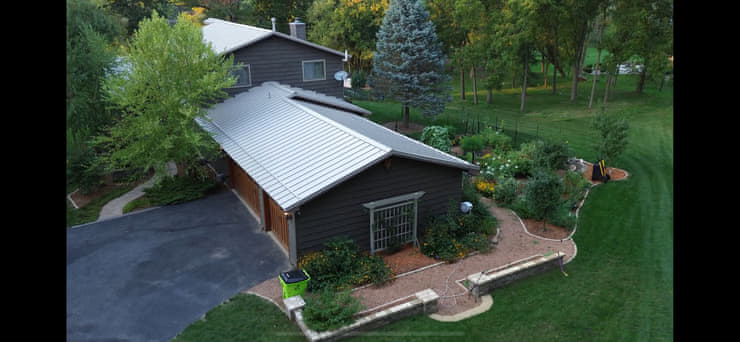
Aerial view of a standing seam metal roof
Standing seam
Christine McAhren
★★★★★ October 2025
Lit and his team of professionals are the best. The roof was installed quickly, and looks amazing. Highly recommend Elite Contracting Group to get the job done.
Donald Heidenreich
★★★★★ July 2025
Great experience from start to finish. The team was professional, prompt, and delivered high-quality work. The roof looks fantastic, and the cleanup was spotless.

Standing seam, exposed-fastener, or stone-coated

People picture one thing when they hear metal roof. There are really three families, and they're not interchangeable:

  • Standing seam (snap-lock or mechanical seam). Hidden clips, no exposed screws, 50 to 75 year life. The residential default.
  • Exposed-fastener (R-panel). Screws driven through the panel face. Lower cost, 30-year roof, gaskets need re-driving every 15 to 20 years. Best for pole barns and shops.
  • Stone-coated steel. Looks like shake or tile from the curb. Same metal performance, traditional look. Heavier than standing seam.
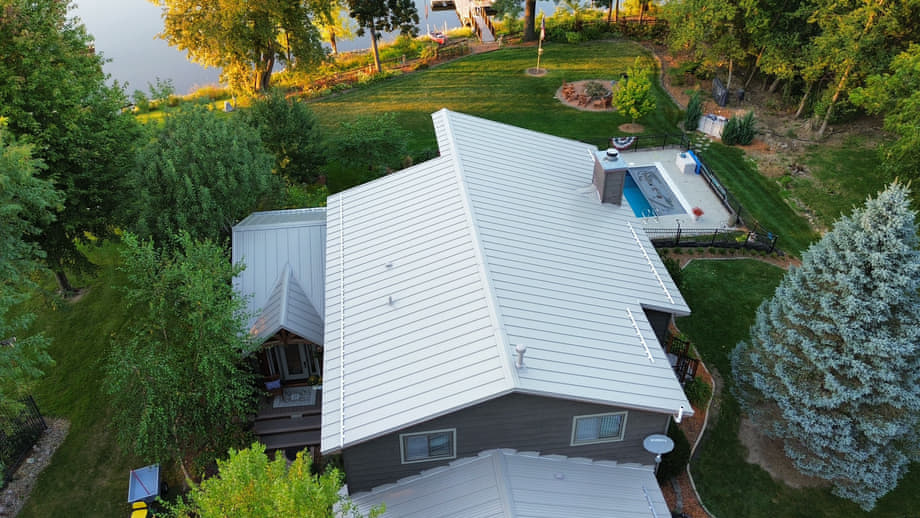
Aerial view of a white standing seam metal roof on a Wisconsin lakefront home installed by Elite Contracting Group
Standing seam · Wisconsin

The honest comparison, before the sales pitch

Metal isn't always the right call. On a starter home you're flipping in three years, asphalt wins. On a forever home, the math changes.

Asphalt shingle

The default, for good reason

  • 20 to 30 years on architectural shingles
  • Lowest upfront cost of any roof type
  • Two or three replacements over a 50-year window
  • Granules start falling at year 12 to 15
  • Class 3 hail standard, Class 4 on premium lines
Standing seam metal

One install, then quiet for decades

  • 50 to 75 years on 24-gauge steel, clipped right
  • Two to three times the upfront cost of asphalt
  • One install, plus occasional sealant and clip checks
  • 30-year paint warranty against fade and chalking
  • Class 4 hail and Class A fire by default

Upfront cost is higher. Long-term cost depends on how long you stay in the house. The gap closes faster than most homeowners expect.

What's actually true

Asphalt salesmen repeat the same three objections. Here's where they fall apart.

  • "Metal attracts lightning." It doesn't. Strike risk is height and shape, not material. A bonded metal roof actually spreads the energy and lowers fire risk.
  • "Snow slides off and crushes things." Standing seam sheds snow faster than asphalt, no ice dams. Snow guards go above doorways, walkways, and AC units on every install.
  • "Metal roofs are loud in the rain." Not on a real house. The barn-roof reputation comes from open pole barns with no deck or insulation. A finished house barely hears it.
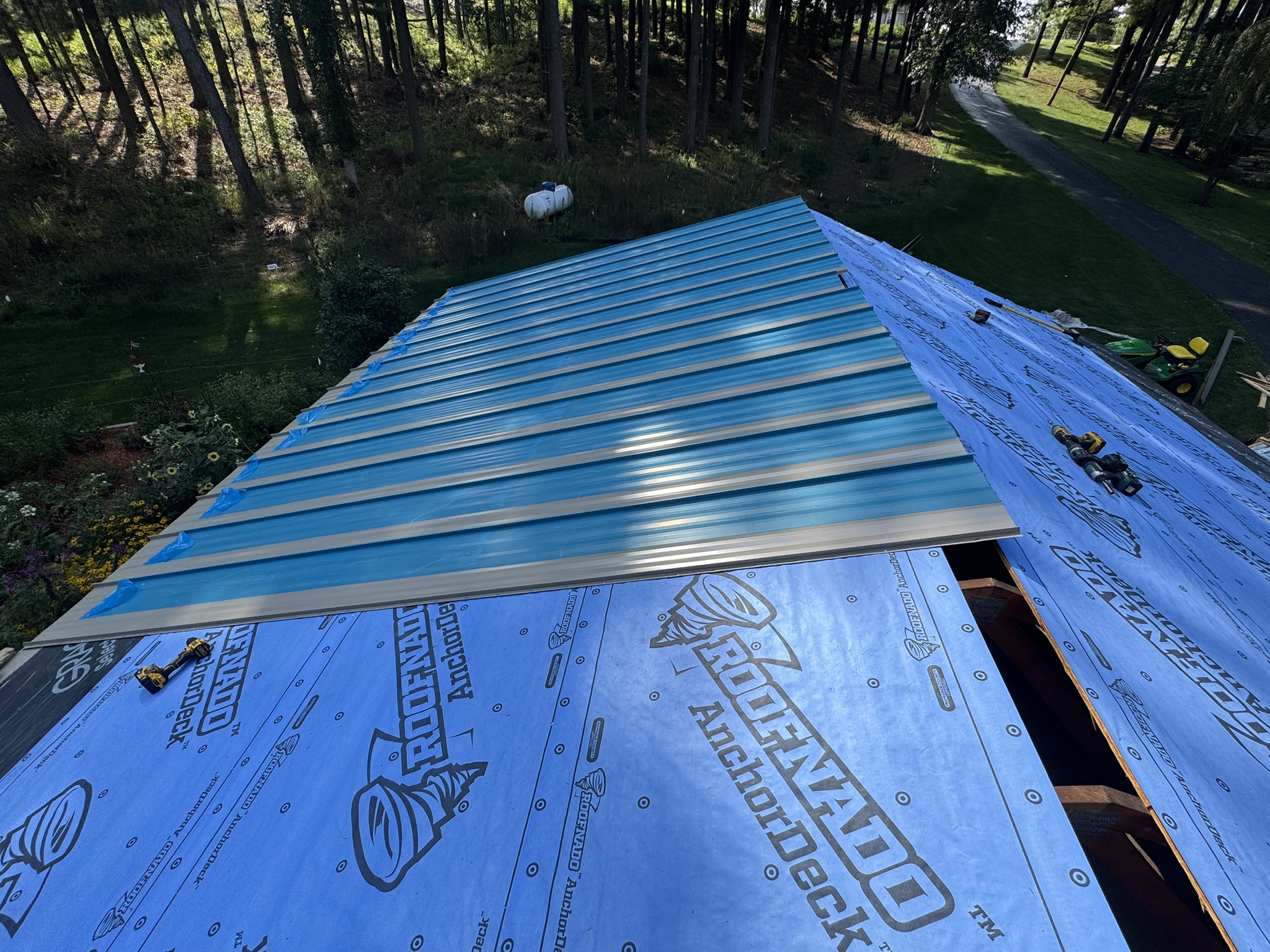
Standing seam metal panels going down over synthetic underlayment on a Wisconsin install by Elite Contracting Group
Standing seam install

Around here, the premium pays back fastest on a few applications

Metal works almost anywhere. It earns its premium back fastest on these:

  • Low-slope additions and porches. Asphalt shingles fail on near-flat roofs. Metal is the only product that holds.
  • Modern farmhouse builds. Black or charcoal metal panels pair with white siding. Right look, longest life.
  • Pole barns, shops, ag buildings. Cheaper exposed-screw metal panel. Lower cost, faster install, built for outbuildings.
  • Historic homes in Belvidere or Beloit. We match the original metal profile so the roof reads right from the street.
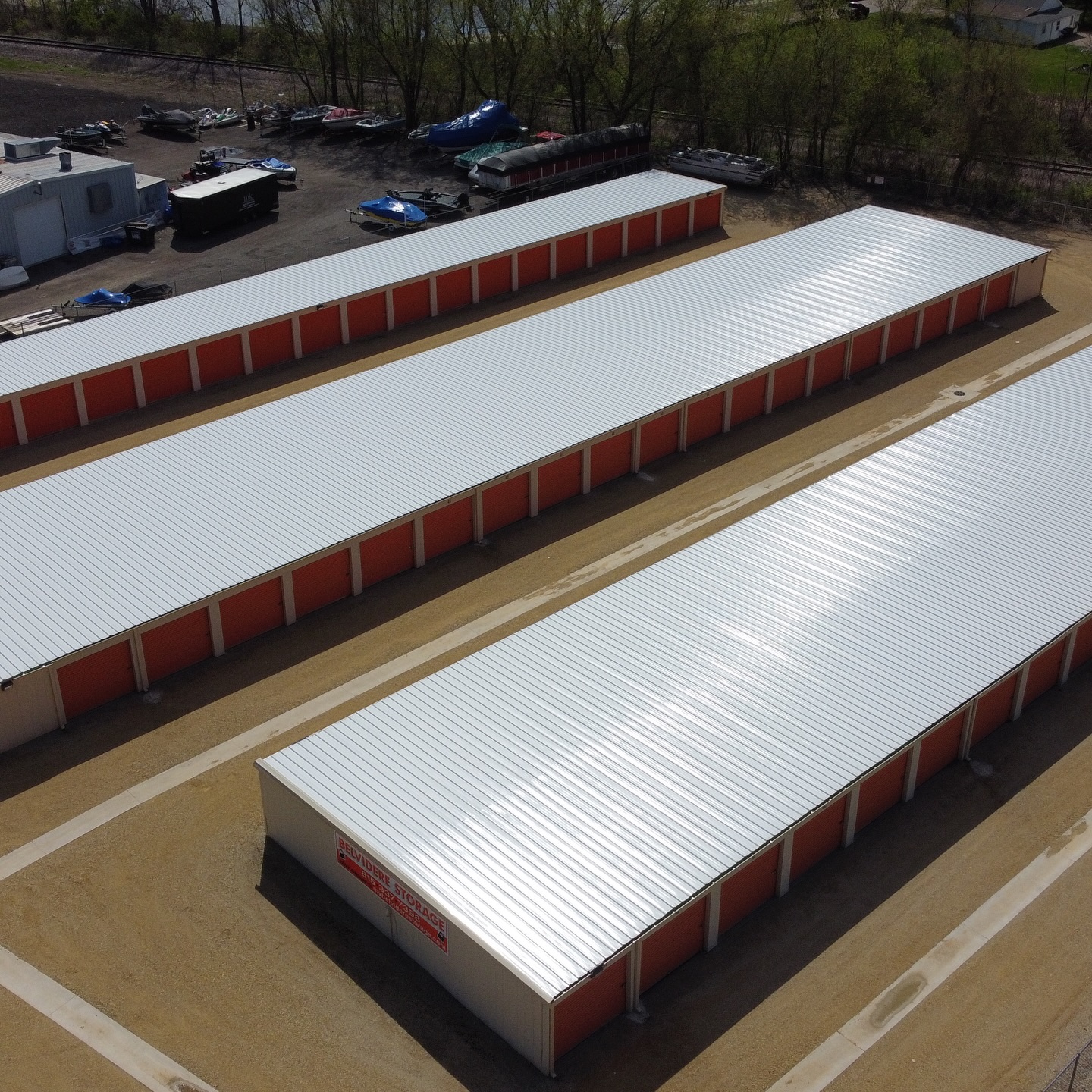
Aerial view of three commercial storage buildings with new white standing seam metal roofs in Belvidere, Illinois, installed by Elite Contracting Group
Belvidere Storage re-roof
Frequently asked

Metal roof questions, answered

How long does a standing seam metal roof last in northern Illinois?

Steel standing seam installed correctly typically lasts 50 to 75 years in our climate. An asphalt roof on the same house needs replacement two or three times in that window. Service life depends on the metal thickness, paint system, and install quality, not just the panel. Aluminum and zinc run longer; copper longer still.

How much does a metal roof cost per square foot?

Standing seam steel runs roughly $12 to $18 per installed square foot in northern Illinois, depending on gauge, paint system, and trim complexity. That's two to three times the upfront cost of asphalt on the same house. Exposed-fastener panels (R-panel) come in cheaper, around $7 to $11 per square foot. Stone-coated steel runs $10 to $15. We walk the roof and quote against your specific project. Asphalt market pricing is on our residential roofing page as a reference point.

Standing seam vs exposed fastener vs stone-coated, which one fits my house?

Standing seam if it's your forever home and you want one roof, never two. Exposed-fastener (R-panel) only on outbuildings, shops, or detached garages where the 20-year gasket re-driving cycle is acceptable and the sightline doesn't matter. Stone-coated steel when the HOA or historic district requires shake or tile profiles and standing seam would read wrong from the curb. The wrong call is exposed-fastener on a primary residence; it lowers resale and adds a maintenance step most homeowners forget.

Do metal roofs attract lightning?

No, and NFPA 780 (the lightning protection standard) addresses this directly: strike probability depends on building height, isolation, and topography, not roof material. The useful nuance: if your house does take a strike, a bonded metal roof disperses the energy across the panel surface and lowers fire-ignition risk compared to asphalt over wood deck, which is why insurance carriers don't surcharge metal in IL or WI.

Why does some metal roofing look wavy or rippled in sunlight?

That waviness is called oil-canning, and it's cosmetic, not structural. The roof still keeps water out. Four things prevent it: grooves rolled into the panel face, a flat deck under the panels, the right clip spacing so panels can expand and contract with temperature, and a heavier 24-gauge steel. Cheap installs skip all four and the roof shows it the first sunny morning.

Do I need snow guards on a metal roof in IL or WI?

Not a code requirement in most Stateline jurisdictions, but it's a competent-install spec. Standing seam sheds snow faster than asphalt, and that snow has to land somewhere. Snow guards above doorways, walkways, AC condensers, and driveway approaches are standard on our installs.